The best discounts this week
Every week you can find the best discounts here.

Mix Saudi Imli Candy Red & Black Tamarind Candy
Premium Sukkari Khajoor from Saudi Arabia – Fresh Golden Dates in Pakistan
Ajwa Khajoor (Premium Original Saudi Dates)
Mabroom Khajoor Saudi Dates Online Pakistan | Premium Quality
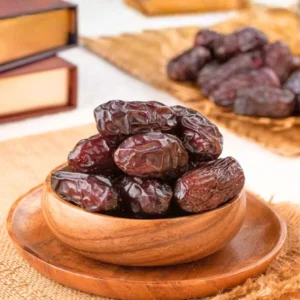
Premium Organic Kalmi Dates (Khajoor) Fresh from Madinah Munawarah
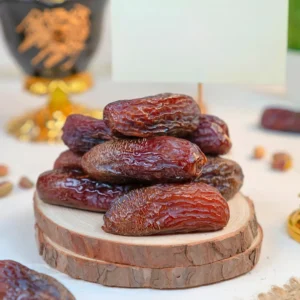
Premium Saudi Amber Khajoor Authentic Madinah Dates
Mabroom Dates Benefits: Nutrition, Health Benefits, and How to Use Them

Mabroom dates benefits are gaining increasing attention among health-conscious consumers, nutrition researchers, and Muslim communities worldwide. Mabroom dates are a premium variety of khajoor known for their firm texture, mild natural sweetness, and balanced nutritional profile. Traditionally grown in the Madinah region of Saudi Arabia, these dates are now widely consumed in Pakistan and other Muslim countries due to their health value and cultural importance. Rich in natural energy, fiber, essential minerals, and antioxidants, Mabroom dates are commonly eaten during Ramadan, especially at iftar and sehri. This article explores the nutritional value, scientifically supported health benefits, diabetes considerations, cultural significance, and practical ways to use Mabroom dates safely as part of a balanced daily diet.
What Are Mabroom Dates?
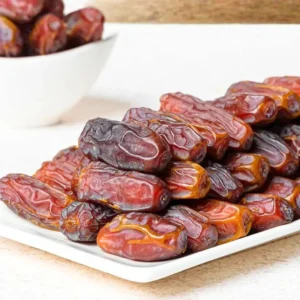
Mabroom dates are a premium date variety originating from Saudi Arabia, mainly the Madinah region.
Key Characteristics
- Shape: Long, slender, and elongated
- Color: Dark brown to reddish-brown
- Texture: Firm, chewy, slightly dry
- Taste: Mildly sweet, not overpowering
Fresh vs Semi-Dried vs Dried Mabroom Dates
- Fresh: Rare outside farms, higher moisture
- Semi-dried (most common): Balanced texture and shelf life
- Fully dried: Firmer, longer storage, slightly concentrated sugars
Why Mabroom Dates Are Considered Premium
- Hand-harvested and carefully sorted
- Lower moisture content improves shelf life
- Balanced sweetness appeals to health-conscious consumers
- Often sourced from Madinah, adding cultural value
Nutritional Profile of Mabroom Dates (Per 100g)

Mabroom dates provide natural energy along with essential micronutrients. Values may vary slightly based on ripeness and drying level.
Mabroom Dates Nutrition Table (Approximate)
| Nutrient | Amount per 100g |
| Calories | 270–280 kcal |
| Natural sugars | 63–66 g |
| Dietary fiber | 6–8 g |
| Protein | 1.5–2 g |
| Fat | 0.2 g |
Key Micronutrients
- Potassium: Supports heart and muscle function
- Magnesium: Helps nerve and muscle health
- Iron: Contributes to oxygen transport in blood
- Calcium: Supports bones and teeth
- Vitamin B6: Important for metabolism and brain health
Antioxidants
- Polyphenols
- Flavonoids
These compounds are associated with reduced oxidative stress.
Nutritional data referenced from USDA FoodData Central and FAO food composition databases.
Scientifically Supported Health Benefits of Mabroom Dates

Mabroom Dates for Digestive Health
Mabroom dates contain dietary fiber, which:
- Supports healthy digestion
- Helps prevent constipation
- Promotes beneficial gut bacteria
In traditional diets, dates are often consumed in the morning to gently stimulate digestion.
Natural Energy Boost and Fatigue Reduction
Mabroom dates provide quick and sustained energy due to natural glucose and fructose.
Ideal for:
- Ramadan iftar and sehri
- Athletes and physically active individuals
- People recovering from fatigue
They replenish energy without artificial additives.
Heart Health and Blood Pressure Support
Mabroom dates are:
- Rich in potassium
- Naturally low in sodium
These properties support:
- Healthy blood pressure
- Proper heart rhythm
Antioxidants may also help protect blood vessels from oxidative damage.
Mabroom Dates and Blood Sugar Control (Diabetes Considerations)
Mabroom dates have a low-to-moderate glycemic index compared to very soft dates.
Why they may be suitable in moderation:
- Fiber slows sugar absorption
- Firm texture leads to slower digestion
Important guidance:
- Limit to 1–2 dates per serving
- Consume with protein or nuts
- Always consult a healthcare professional
This information is for general education and not medical advice.
Antioxidants and Anti-Inflammatory Properties
Polyphenols and flavonoids in Mabroom dates may:
- Support immune health
- Reduce oxidative stress
- Play a role in healthy aging
These effects are observed in date varieties studied in peer-reviewed nutrition research.
Mabroom Dates vs Other Popular Dates
Mabroom Dates vs Ajwa Dates
| Feature | Mabroom | Ajwa |
| Texture | Firm | Soft |
| Taste | Mildly sweet | Earthy, slightly sweet |
| Cultural value | Premium | Highly religious |
| Daily use | Excellent | Often medicinal |
Ajwa dates hold special religious significance, while Mabroom dates are often preferred for daily eating.
Mabroom Dates vs Sukkari Dates
| Feature | Mabroom | Sukkari |
| Sweetness | Moderate | Very high |
| Texture | Firm | Very soft |
| Sugar impact | Lower | Higher |
| Diabetic-friendly | More suitable | Less suitable |
Sukkari dates are dessert-like, while Mabroom dates suit balanced diets.
Mabroom Dates vs Amber Dates
| Feature | Mabroom | Amber |
| Size | Medium-long | Very large |
| Texture | Firm | Semi-soft |
| Nutritional density | High | Moderate |
| Shelf life | Longer | Shorter |
Amber dates are visually impressive, while Mabroom dates offer better daily practicality.
Cultural, Traditional, and Religious Importance of Mabroom Dates
Dates hold a central place in Islamic tradition. The Prophet Muhammad ﷺ encouraged breaking the fast with dates.
In Pakistan and Muslim Cultures
- Common at iftar and sehri
- Served to guests as hospitality
- Given as gifts during Ramadan and Umrah/Hajj
Dates symbolize nourishment, generosity, and spiritual connection.
How Many Mabroom Dates Should You Eat Per Day?
General Recommendation
- 2–4 Mabroom dates daily for most healthy adults
Adjustments
- Diabetics: 1–2 dates with meals
- Weight management: 2 dates as a snack
- Athletes: 3–5 dates around workouts
Best Time to Eat
- Morning
- Pre-workout
- At iftar to restore energy
Precautions and Possible Side Effects
While healthy, Mabroom dates should be eaten in moderation.
Possible Concerns
- High calorie density
- Blood sugar spikes if overeaten
- Sulfites in some commercial dates (check labels)
Helpful Tips
- Drink water alongside dates
- Pair with nuts or yogurt
- Avoid excessive portions
How to Store and Use Mabroom Dates in Daily Diet
Storage Tips
- Airtight container
- Cool, dry place
- Refrigeration for long-term storage
Easy Ways to Use Mabroom Dates
- Chop into oatmeal or yogurt
- Blend into smoothies
- Use in homemade energy balls
- Serve with nuts at iftar
Their firm texture makes them versatile for cooking and snacking.
Conclusion
Mabroom dates are a nutritious, premium variety of khajoor that offer a balanced combination of natural energy, dietary fiber, essential minerals, and antioxidants. With their firm texture and mild sweetness, they are well suited for daily consumption, Ramadan fasting, and people who prefer dates with moderate sugar levels. Compared to other popular dates like Ajwa, Sukkari, and Amber, Mabroom dates stand out for their versatility, longer shelf life, and suitability for health-conscious individuals, including those managing blood sugar with proper portion control. When eaten in moderation as part of a balanced diet, Mabroom dates can be a wholesome, culturally significant, and nourishing food choice for families in Pakistan and across the Muslim world.
Frequently Asked Questions (People Also Ask)
Are Mabroom dates healthier than Ajwa dates?
Both are nutritious. Ajwa dates have religious importance, while Mabroom dates are better for daily balanced intake.
Can diabetics eat Mabroom dates?
Yes, in moderation, with portion control and medical guidance.
Are Mabroom dates good for weight loss?
They can fit into weight management when eaten in small portions due to fiber content.
How many calories are in Mabroom dates?
About 270–280 calories per 100g.
Are Mabroom dates good for Ramadan fasting?
Yes. They provide quick energy, fiber, and minerals ideal for fasting.